Dollar to cedi: what the rate really is, and how to get a fair one
The "dollar rate" you see online isn't the rate you'll get at the counter. Here's the difference between the mid-market rate, the Bank of Ghana rate and what banks and bureaus charge, and how to avoid overpaying.

There isn't one "dollar rate" in Ghana. There are at least three, and knowing the difference can save you hundreds of cedis every time you change money. On 27 September 2026 the mid-market rate was GH₵11.63 to the dollar, and the Bank of Ghana's interbank rate on 25 September was GH₵11.62. But Ghana's banks and forex bureaus were typically selling dollars at GH₵12.05 and buying them at GH₵11.42. That gap is where your money goes.
This guide explains each rate, what the margin costs you, how to check a quote before you agree to it, and how to stay on the right side of the law. To convert any amount, use the cedi converter. To test a rate you've been offered, use the rate checker.
The three rates, in plain terms
1. The mid-market rate. The midpoint between what banks pay for dollars and what they sell them for among themselves. It's the rate most apps and converters show, and the fairest single figure. But no ordinary customer can deal at it.
2. The Bank of Ghana's interbank rate. The rate the Bank of Ghana publishes each working day from trading between banks. It's the official reference, the figure in contracts, statistics and many news reports. It's usually very close to the mid-market rate.
3. The buying and selling rates at the counter. What a bank, forex bureau or money-transfer service actually offers you:
- the selling rate, when they sell you dollars and you pay cedis. It's higher than the mid-market rate.
- the buying rate, when they buy your dollars and you receive cedis. It's lower.
The difference between those two is the dealer's margin. Some dealers also add a fee on top, so always ask what you'll actually pay or receive in total.

The five cedi note. Every price in Ghana must be in cedis: the cedi is the only legal tender. Photo: أشرف اليماني, CC BY-SA 4.0, via Wikimedia Commons
What the margin costs you: a worked example
Take $500, at the rates on 27 September 2026:
| Rate | $500 comes to | |
|---|---|---|
| Mid-market rate | GH₵11.63 | GH₵5,816.00 |
| Bank of Ghana interbank rate (25 Sept) | GH₵11.62 | GH₵5,811.25 |
| Buying $500 at the typical selling rate | GH₵12.05 | GH₵6,025.00 |
| Changing $500 at the typical buying rate | GH₵11.42 | GH₵5,707.50 |
If you're paying a supplier abroad, $500 costs you about GH₵6,025, about 3.6% more than the mid-market rate. If a relative sends you $500, you'll get about GH₵5,707.50 when you change it, about 1.9% less than mid-market. Buy $500 and sell it straight back and you'd lose GH₵317.50 to the spread.
Those are typical rates, the middle of what Ghana's banks and bureaus post. Some are better and some are much worse, which is why comparing matters.
How to check a quote before you agree
Say a bureau offers to sell you dollars at GH₵12.40 while the typical selling rate is GH₵12.05. On $500, that's GH₵175 more than you'd pay at a typical dealer, a 2.9% worse rate. Or say someone offers to buy your $300 at GH₵11.10 when the typical buying rate is GH₵11.42. You'd get about GH₵94.50 less.
The rate checker does exactly this. Enter the rate you've been offered and whether you're buying or selling. It tells you how far the quote is from the typical rate, and it lists the providers currently offering the best rates. A few habits help too:
- Ask for the total, not just the rate. Fees can turn a good rate into a bad deal.
- Compare two or three places for large amounts. Rates differ more between dealers than most people expect.
- Check the time. Rates move during the day, especially when the cedi is volatile.

The Bank of Ghana, which licenses forex dealers and publishes the daily interbank rate. Photo: Natsubee, CC BY-SA 3.0, via Wikimedia Commons
Stay legal: licensed dealers only
Under the Foreign Exchange Act, 2006 (Act 723), no one may run a business dealing in foreign exchange without a licence from the Bank of Ghana, and money sent into or out of Ghana must go through a licensed money-transfer business or other authorised dealer. The Bank of Ghana has repeatedly warned the public against unauthorised forex dealing, including in a notice in 2025. It has also named money-transfer platforms that weren't approved to operate in Ghana's remittance market.
In practice:
- Change money at a bank or a licensed forex bureau, not with a street dealer. You have no protection if a street deal goes wrong, and it's illegal.
- Receive money from abroad through a licensed channel. That can be your bank, or a money-transfer service working with a licensed Ghanaian partner. If you're unsure whether a service is approved, check with the Bank of Ghana.
- Prices in Ghana must be in cedis. The Bank of Ghana prohibits pricing, advertising or receipting goods and services in foreign currency. A landlord or school quoting fees in dollars should give you a cedi price.
Past rates, for invoices, budgets and school fees
Sometimes you need the rate from a particular day: to check an old invoice, work out what a remittance was worth, or compare a school's fee rise. The cedi converter converts at the Bank of Ghana's rate for any date back to 1996. Just pick the day under "Rate on". On a weekend or public holiday, when the Bank publishes no rate, it uses the last rate before that day and tells you which day it used. Before July 2007, when four zeros were taken off the currency, it shows figures in today's cedis.
Common questions
What is the dollar to cedi rate today? On 27 September 2026, the mid-market rate was GH₵11.63 and the Bank of Ghana's interbank rate (25 September) was GH₵11.62. Banks typically sold at GH₵12.05 and bought at GH₵11.42. The converter always shows the latest.
Why is the bank's rate different from the rate on Google? Online rates are usually the mid-market rate. Banks and bureaus sell above it and buy below it, and the difference is their margin.
Where can I change dollars in Accra at a good rate? At a bank or a licensed forex bureau, after comparing a few. The rate checker lists the providers posting the best rates today.
Is it legal to change money with street dealers? No. Under the Foreign Exchange Act, 2006 (Act 723), dealing in foreign exchange needs a Bank of Ghana licence, and the Bank has warned repeatedly against unauthorised dealers.
How do I find the exchange rate on a past date? Use the cedi converter and pick the day under "Rate on". It uses the Bank of Ghana's rate for that day, back to 1996.
Can a landlord charge rent in dollars? The Bank of Ghana prohibits pricing and receipting goods and services in foreign currency in Ghana. The cedi is the only legal tender, so ask for the price in cedis.
Last checked 27 September 2026 against the Bank of Ghana's interbank rates, the Bank of Ghana's notice on unauthorised foreign exchange transactions and the Foreign Exchange Act, 2006 (Act 723). Rates move every day; the converter and rate checker always use the latest.
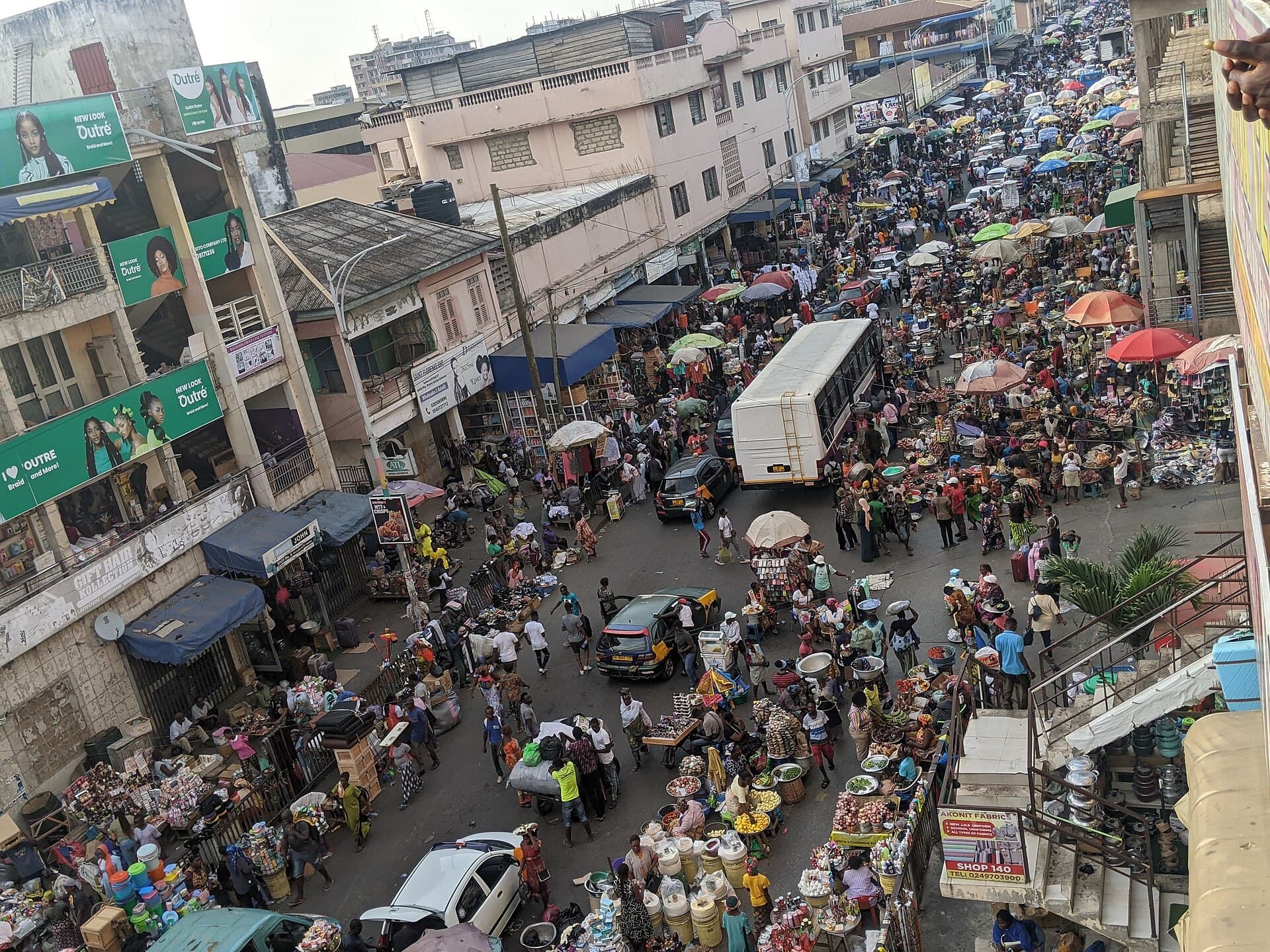
Cover photo: Efo Komla, CC BY-SA 4.0, via Wikimedia Commons