VAT in Ghana explained: the 20% rate, NHIL and the GETFund levy (2026)
Since 1 January 2026, VAT (15%), NHIL (2.5%) and the GETFund levy (2.5%) are all charged on the same price, 20% in total. Here's how to add them to a price, take them out of one, and what changed.
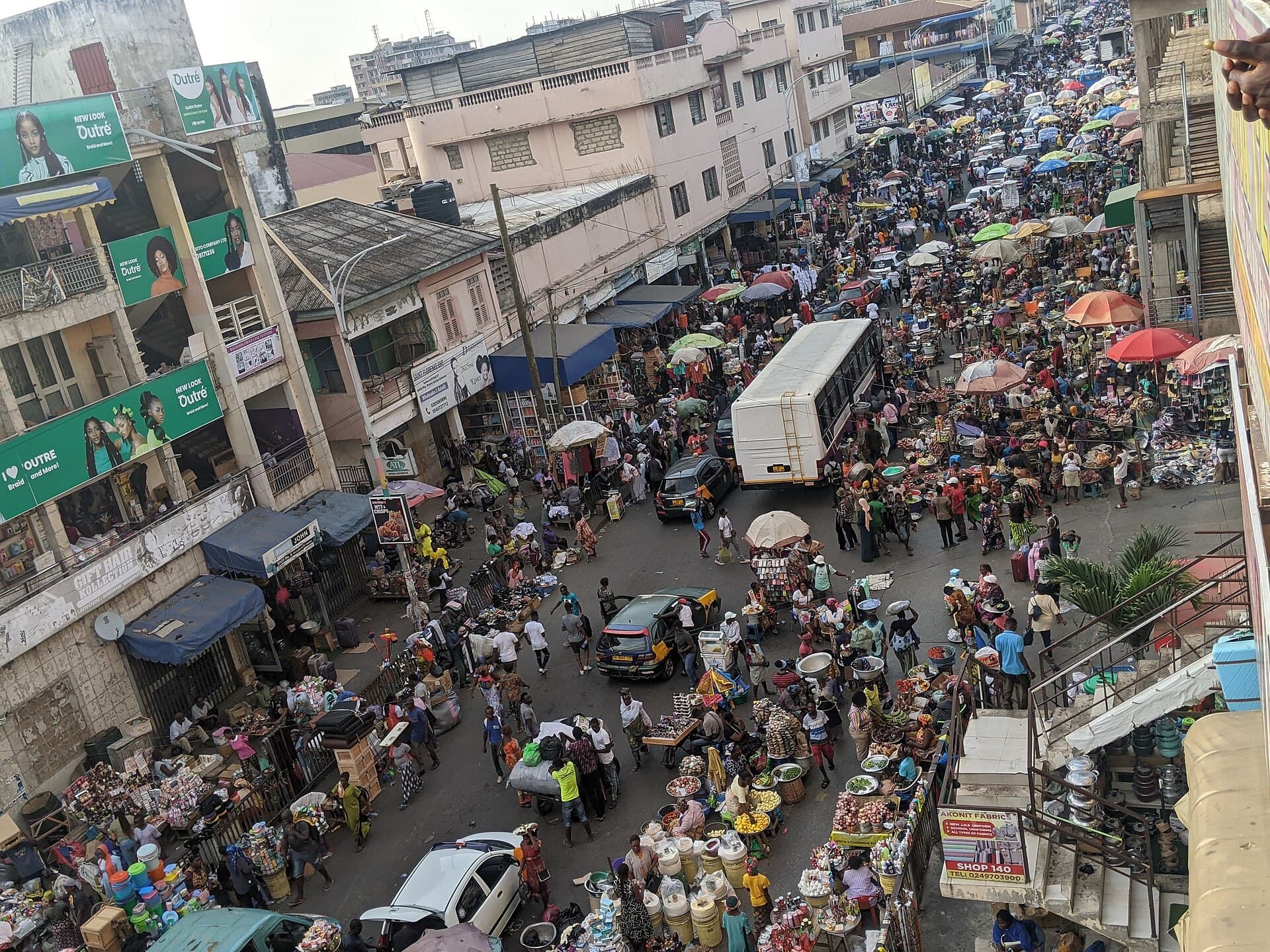
In Ghana, a VAT-registered business adds three taxes to the price of most goods and services: VAT at 15%, the National Health Insurance Levy (NHIL) at 2.5%, and the GETFund levy at 2.5%. Since 1 January 2026 all three are charged on the same price, the value of the supply, so together they come to exactly 20%. On a GH₵1,000 sale, the customer pays GH₵1,200.
That simple 20% is new. Until the end of 2025, VAT was charged on top of the levies, a COVID-19 levy was part of the stack, and the arithmetic was messier. The Value Added Tax Act, 2025 (Act 1151) cleaned it up. This guide shows how it works now, with worked invoices. For any amount, the VAT calculator does the sum and shows every line.
Adding VAT to a price
Charge each tax on the price before tax, then add them up:
| On a GH₵1,000 supply | Rate | Amount |
|---|---|---|
| Price before tax | GH₵1,000.00 | |
| NHIL | 2.5% | GH₵25.00 |
| GETFund levy | 2.5% | GH₵25.00 |
| VAT | 15% | GH₵150.00 |
| Total the customer pays | 20% | GH₵1,200.00 |
This is the same example the Ghana Revenue Authority uses. A few more, from the same calculation:
| Price before tax | NHIL | GETFund | VAT | Total tax | Price with tax |
|---|---|---|---|---|---|
| GH₵250.00 | GH₵6.25 | GH₵6.25 | GH₵37.50 | GH₵50.00 | GH₵300.00 |
| GH₵10,000.00 | GH₵250.00 | GH₵250.00 | GH₵1,500.00 | GH₵2,000.00 | GH₵12,000.00 |
| GH₵15,000.00 | GH₵375.00 | GH₵375.00 | GH₵2,250.00 | GH₵3,000.00 | GH₵18,000.00 |
Taking VAT out of a price that already includes it
Shop prices are usually quoted with tax included, and you often need the price before tax, for example to fill in an invoice or check a receipt. The rule is simple: divide the tax-inclusive price by 1.2. What's left is the price before tax, and the difference is the tax.
- A GH₵1,200 invoice total: GH₵1,200 ÷ 1.2 = GH₵1,000 before tax, so GH₵200 is tax.
- A GH₵60 item: GH₵60 ÷ 1.2 = GH₵50 before tax, so GH₵10 is tax (NHIL GH₵1.25, GETFund GH₵1.25, VAT GH₵7.50).
- A GH₵5,000 total: GH₵5,000 ÷ 1.2 = GH₵4,166.67 before tax, and the tax is GH₵833.33.
A common mistake is to take 20% off the inclusive price. That gives GH₵960 for the first example instead of GH₵1,000. The tax is 20% of the price before tax, which is one sixth of the price with tax. The VAT calculator has a "price includes tax" option that does this for you.
What changed on 1 January 2026
The Value Added Tax Act, 2025 (Act 1151) made four changes most businesses will notice:
- One base for all three taxes. NHIL, GETFund and VAT are all charged on the value of the supply. Before, VAT was charged on the price plus the levies, so the effective rate was higher, about 21.9% including the COVID-19 levy.
- The 1% COVID-19 Health Recovery Levy was abolished.
- NHIL and GETFund are claimable as input tax. A registered business can now recover the levies it pays on its purchases, as it does with VAT. Before 2026 the levies were a cost it couldn't recover.
- The flat rate schemes were removed. The 3% flat rate for retailers of goods and the 5% scheme for immovable property no longer exist. Businesses that used them now charge the standard rate and claim input tax.
If you run a business and haven't updated your invoice template since 2025, check it. Charging VAT on top of the levies, or adding a COVID-19 levy line, is now wrong.

Takoradi Harbour. Goods coming into Ghana pay import VAT, NHIL and GETFund at the port. Photo: Banku, CC BY-SA 3.0, via Wikimedia Commons
How a business actually pays: output tax minus input tax
VAT is collected at every stage but only paid once overall, because each registered business pays GRA only the difference between:
- output tax, the VAT and levies it charged its customers, and
- input tax, the VAT and levies it paid on its own business purchases.
Say Kofi runs a registered hardware shop. In a month he buys stock for GH₵10,000 before tax, paying GH₵2,000 in VAT and levies to his suppliers. He sells goods for GH₵15,000 before tax and charges his customers GH₵3,000.
| Before tax | VAT and levies (20%) | |
|---|---|---|
| Sales (output tax) | GH₵15,000 | GH₵3,000 |
| Purchases (input tax) | GH₵10,000 | GH₵2,000 |
| Paid to GRA | GH₵1,000 |
Kofi pays GRA GH₵1,000, which is 20% of the GH₵5,000 of value his shop added. Since 2026 the full GH₵2,000 on his purchases counts as input tax, including the levies. That's the biggest practical gain from the new Act for many small businesses.
To claim input tax you need proper VAT invoices from your suppliers, so keep them.
Who has to register
A business that supplies goods must register for VAT once its taxable turnover passes GH₵750,000 in twelve months. Below that it doesn't charge VAT, and it can't claim input tax either. The rules for service providers and for particular sectors differ, so check with GRA if you supply services.

Tomatoes in a Tamale market. Unprocessed local food is generally exempt from VAT. Photo: Ibn Shiraz, CC BY-SA 4.0, via Wikimedia Commons
Exempt and zero-rated supplies
Not everything carries VAT. Some supplies are exempt: no VAT is charged, and the seller can't claim input tax on what it buys to make them. Many unprocessed local foodstuffs and some medical and educational supplies are examples. Others are zero-rated: taxed at 0%, so no VAT is charged but input tax can still be claimed. Exports are the usual example. The lists are set out in the VAT Act and change from time to time, so check GRA's current list for your goods before assuming either way.
Common questions
What is the VAT rate in Ghana in 2026? VAT is 15%, plus NHIL at 2.5% and the GETFund levy at 2.5%, all on the price before tax. Together that's 20%.
How do I calculate VAT in Ghana? Multiply the price before tax by 0.2 for the total tax, or by 1.2 for the price with tax. On GH₵1,000 that's GH₵200 in tax and GH₵1,200 in total. The VAT calculator shows each line separately.
How do I remove VAT from a price? Divide the tax-inclusive price by 1.2. GH₵1,200 ÷ 1.2 = GH₵1,000 before tax.
Is the COVID-19 levy still charged? No. It was abolished from 1 January 2026.
Are NHIL and GETFund still separate from VAT? They're still separate taxes and are shown as separate lines on an invoice. But since 2026 they're charged on the same base as VAT and can be claimed as input tax like VAT.
Is there still a VAT flat rate scheme? No. The 3% flat rate scheme for goods and the 5% scheme for immovable property were removed from 1 January 2026.
Last checked 27 September 2026 against the Ghana Revenue Authority's VAT guidance and the Value Added Tax Act, 2025 (Act 1151). Rates change; the VAT calculator always uses the current ones. This guide explains how the tax works; it isn't tax advice for your business.
Cover photo: JustSwanzy, CC BY-SA 4.0, via Wikimedia Commons